
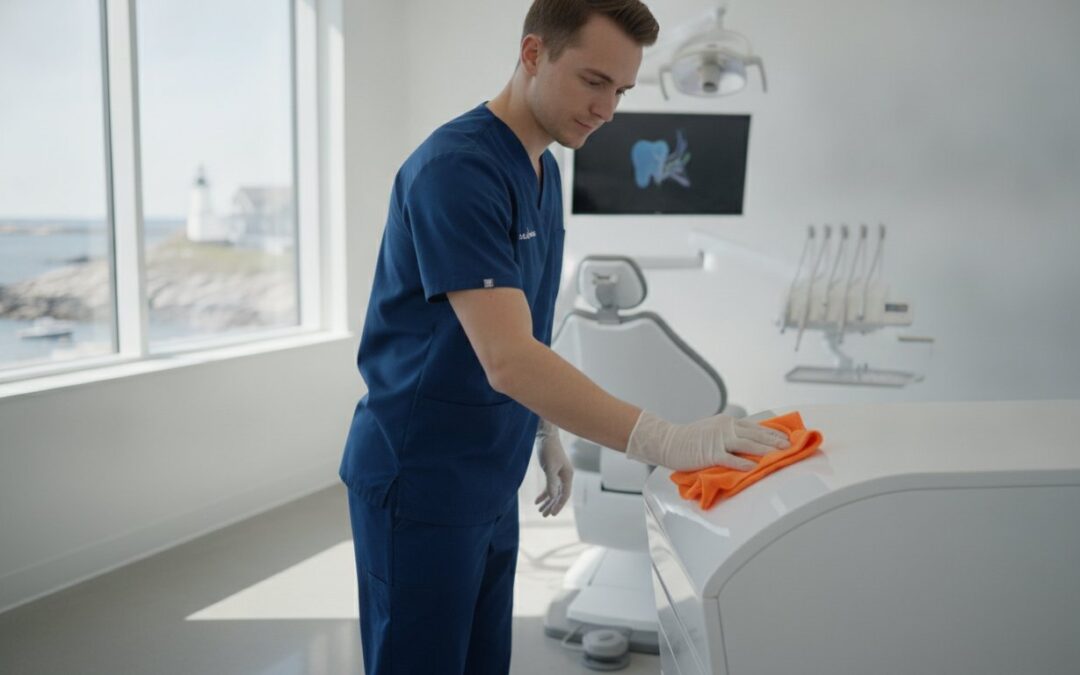
Did you know that proper cleaning and disinfection protocols can reduce healthcare-associated infections by up to 40 percent according to the CDC? In a high-stakes environment like a dental practice, the difference between a surface that looks clean and one that is truly disinfected is everything. You likely already understand that patient safety and professional image are the cornerstones of your success, yet it’s easy to feel overwhelmed by the technical requirements of medical-grade sanitation. Many practitioners find themselves wondering exactly how often should a dental office be cleaned to stay compliant with OSHA standards while avoiding staff burnout.
We agree that your team’s primary focus should be on patient care, not the stress of a looming health inspection. This guide provides the clarity you need by outlining essential cleaning frequencies for every zone in your practice. You’ll discover how to distinguish between daily housekeeping and the rigorous requirements of the OSHA Bloodborne Pathogens Standard. We will preview a clear, actionable schedule that helps you maintain a high-end image, reduces the risk of cross-contamination, and ensures your facility meets the highest professional standards every single day.
Key Takeaways
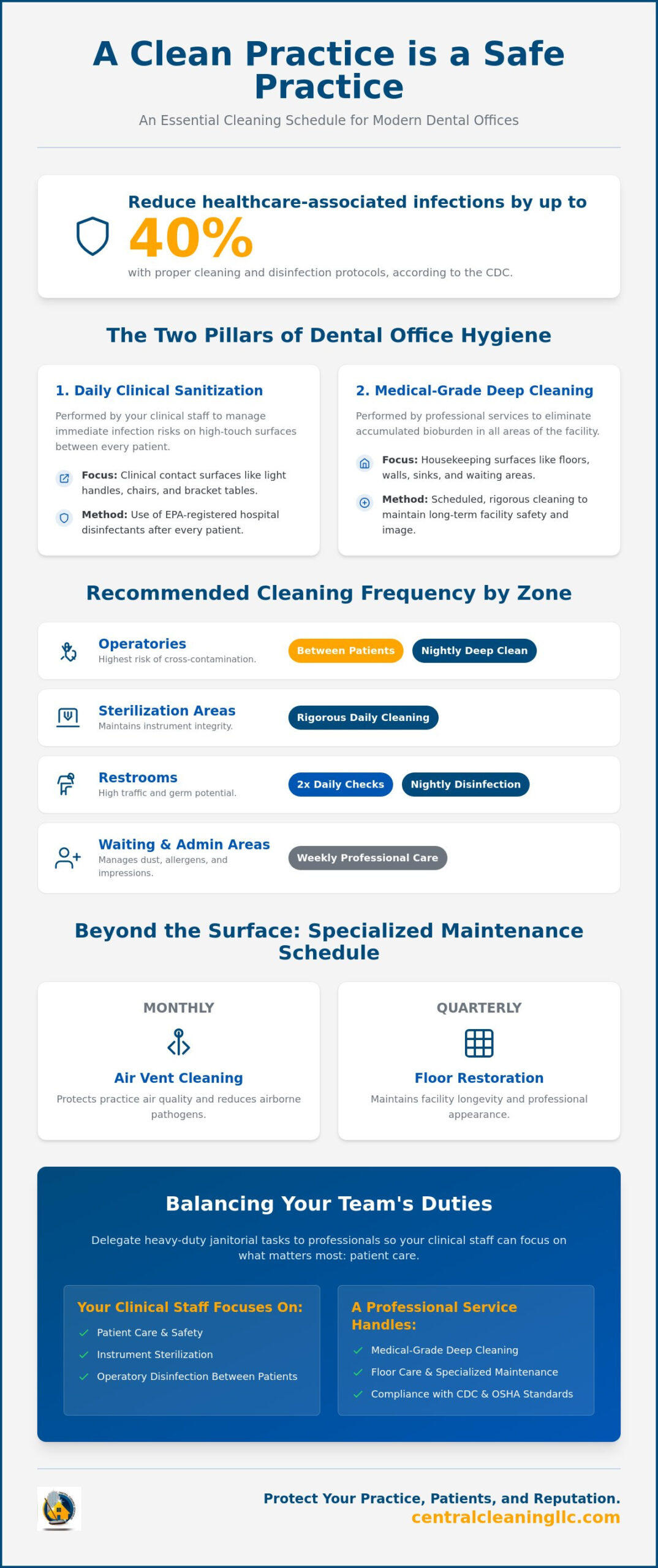
- Learn the critical distinction between your team’s daily clinical wipe-downs and the medical-grade deep cleaning required to manage bioburden throughout the facility.
- Determine exactly how often should a dental office be cleaned by zone, from the continuous disinfection of operatories to the weekly professional care of waiting rooms.
- Establish a proactive schedule for specialized maintenance, including quarterly floor restoration and monthly air vent cleaning to protect your practice’s air quality.
- Balance your workload effectively by delegating heavy-duty janitorial tasks to professionals so your clinical staff can focus entirely on patient care and sterilization.
- Protect your practice’s reputation and compliance status by aligning your sanitation protocols with the latest CDC and Massachusetts-specific health board guidelines.
The Baseline: Daily Sanitization vs. Medical-Grade Deep Cleaning
Maintaining a safe dental practice requires a dual approach to hygiene that goes beyond simple tidying. You can’t treat a clinical operatory the same way you treat a standard office reception area. When you consider how often should a dental office be cleaned, it’s helpful to view the task through two lenses: immediate infection control and long term facility maintenance. Daily cleaning by your clinical staff handles the high touch surfaces that pose the most immediate risk to patients. In contrast, professional medical-grade cleaning addresses the hidden bioburden that naturally accumulates in non-clinical zones and hard to reach areas.
There is also a vital scientific distinction between sanitization and disinfection. Sanitization is a process that reduces the number of bacteria on a surface to a level considered safe by public health standards. Disinfection, however, involves the use of specialized chemicals to actually kill specific pathogens. These protocols are rooted in fundamental infection prevention and control principles designed to break the chain of transmission in a healthcare setting. A truly clean office utilizes both methods to ensure every square foot is safe for both your team and your patients.
Defining Clinical Contact Surfaces
Clinical contact surfaces are the areas most likely to be contaminated during a procedure. This includes light handles, bracket tables, dental chair switches, and radiograph equipment. Because these surfaces are touched frequently by gloved hands or may be exposed to aerosols, they require the highest level of attention. You must use EPA-registered hospital disinfectants on these surfaces after every single patient visit. This isn’t just a recommendation; it’s a core requirement for maintaining a sterile environment. If a surface can’t be easily cleaned, you should use disposable barriers that are changed between appointments to provide an extra layer of protection.
Defining Housekeeping Surfaces
Housekeeping surfaces include areas like floors, walls, sinks, and window treatments. While these don’t typically come into direct contact with patients or dental instruments, they still harbor dust and microbes that can migrate throughout the office. The frequency for these areas depends on the “soil load” or how much foot traffic the area receives. Sinks and floors in clinical areas should be addressed daily, while walls and baseboards might only require a weekly or monthly schedule. This is where professional janitorial services become indispensable. While your staff focuses on patient care, a professional team ensures that these larger surfaces are maintained to a high standard, preventing the buildup of grime that can damage your professional image and your facility’s longevity.
Understanding these categories helps you build a more efficient schedule. You don’t want your highly trained dental assistants spending their time scrubbing baseboards, just as you wouldn’t expect a general cleaner to handle sterilized instruments. By separating these duties, you ensure your office remains a safe, welcoming space for everyone who walks through your doors.
Dental Office Cleaning Frequency by Zone
Every area of your practice serves a different purpose, which means a one size fits all approach to hygiene simply won’t work. When determining how often should a dental office be cleaned, you must look at the specific risk levels of each zone. By establishing a tiered system, you ensure that high risk clinical areas receive the intensity they require while administrative spaces remain tidy and professional. This organized approach reduces the burden on your staff and provides peace of mind for your patients. A reliable maintenance plan typically follows these frequencies:
- Operatories: Continuous disinfection between every patient and a deep clinical cleaning every night.
- Restrooms: Minimum of two checks during business hours with professional nightly disinfection.
- Sterilization Areas: Rigorous daily cleaning to maintain the integrity of your instruments.
- Administrative Zones: Weekly dusting and floor maintenance to manage allergens and dust.
Maintaining these standards ensures you stay aligned with CDC guidelines for dental settings, which emphasize the importance of environmental surface control. If you find your team is struggling to keep up with these demands, a professional dental office cleaning partner can handle the heavy lifting after hours.
The High-Traffic Waiting Room
The reception area is often the primary source of external pathogens brought in from the outside world. Because this is the first place patients see, its cleanliness directly impacts their trust in your clinical care. Daily tasks should focus on high touch points like door handles, check in kiosks, and chair armrests. To maintain a truly high end image, you should also schedule bi-weekly professional tasks such as upholstery cleaning and detailed wiping of window sills to prevent the accumulation of outdoor pollutants.
Clinical Operatory Standards
In the operatory, the challenge is managing aerosol spray and splatter that can settle on non-clinical surfaces like cabinetry and floor corners. While your assistants handle the immediate chairside disinfection, nightly floor care is essential for removing microscopic debris that standard mopping might miss. The splatter zone is the area within three feet of the patient’s mouth where blood and saliva are most likely to land; it requires thorough disinfection with an EPA-registered hospital grade product after every procedure. Nightly professional care ensures these zones are reset to a medical-grade standard before the first patient arrives the next morning.
Beyond the Surface: When to Schedule Specialized Deep Cleans
While daily routines manage immediate risks, long-term safety depends on a structured schedule for intensive maintenance. If you only focus on visible surfaces, you might miss the microscopic threats that accumulate over time. When deciding how often should a dental office be cleaned for maximum safety, you must account for these specialized tasks:
- Monthly: Deep clean air vent grills and exhaust fans to stop dust and pathogens from circulating.
- Quarterly: Perform professional carpet extraction and hard floor stripping or waxing to remove embedded bioburden.
- Semi-Annually: Conduct high-level dusting of light fixtures, ceiling corners, and high shelves that are often missed.
- Immediate: Schedule a comprehensive disinfection after any office renovations or a known exposure to a highly infectious disease.
Quarterly tasks are vital for the longevity of your facility. High-traffic floors in a dental setting endure significant wear and tear. Over time, standard mopping can push dirt into the grout lines or leave a film on hard surfaces. Professional stripping and waxing every three months removes these layers, ensuring the floor remains non-porous and easy to sanitize. Similarly, professional carpet extraction pulls out deep-seated allergens that standard vacuuming simply leaves behind.
Hidden Bacteria Hotspots
Pathogens often hide where standard mops and wipes can’t reach. The bases of dental chairs and the intricate mechanisms beneath the seat are prime examples of areas that require monthly attention. Moisture also tends to accumulate inside cabinetry and under-sink areas, creating a breeding ground for mold and bacteria. To effectively manage these risks, professional teams use HEPA-filtered vacuums that trap 99.97 percent of particles. This level of thoroughness is essential for meeting OSHA’s Bloodborne Pathogens standard, which mandates strict decontamination of all equipment that may have been exposed to infectious materials.
HVAC and Air Quality Maintenance
Air quality is a critical component of a sterile environment. Dust particles resting on vent grills can easily become airborne, compromising the sterile field during delicate procedures. You should change your HVAC filters at least every three months, or more frequently if your practice sees high patient volume. Regular vent sanitation also helps reduce the buildup of Volatile Organic Compounds (VOCs). These chemicals often linger after heavy use of disinfectants, and proper ventilation is the best way to keep the air fresh for your staff. When considering how often should a dental office be cleaned, don’t overlook the air your patients breathe. By integrating these air quality checks into your schedule, you provide a healthier atmosphere that supports both patient recovery and employee well-being.
Balancing In-House Staff Duties with Professional Janitorial Services
Running a successful practice requires a team that operates at peak efficiency. While your clinical staff are experts in oral health, they aren’t professional janitors. Expecting a highly trained dental hygienist to scrub baseboards or strip floor wax after a long day of patient care often leads to “cleaning fatigue.” This burnout can lower morale and distract from the precision needed for sterilization and patient interaction. When determining how often should a dental office be cleaned, the division of labor is just as important as the schedule itself. Delegating heavy-duty tasks to a specialized team allows your staff to focus on what they do best: patient care and clinical safety.
Using a bonded and insured medical-grade cleaning company also provides significant liability benefits. Professionals understand the nuances of cross-contamination and use industrial equipment that most offices don’t have on hand. Finding reliable dental office sanitation services MA providers who truly grasp the rigors of your industry ensures your facility remains a high-end environment without compromising your team’s energy or focus. A clear separation of duties protects your staff from unnecessary labor while ensuring every corner of your office meets regulatory standards.
Cost-Benefit of Outsourcing
The financial logic of outsourcing is clear when you compare the hourly rate of a dental professional to that of a janitorial specialist. A hygienist’s time is far more valuable when spent on billable procedures rather than manual labor. Beyond the immediate hourly savings, a Global Cleaning Industry study shows that investing in professional cleaning can lead to a 20 percent increase in patient satisfaction and retention. Specialized equipment, like high-speed floor scrubbers and HEPA-filtered vacuums, achieves a level of deep cleaning that standard mops simply cannot match. Maintaining consistent logs through professional checklists also ensures you’re always prepared for a surprise health inspection.
Scheduling Without Disruption
The most effective cleaning happens when the office is empty. After-hours service allows for a thorough reset of the facility without interfering with patient flow or creating trip hazards with cords and wet floors. When you establish how often should a dental office be cleaned by a professional team, you create a predictable rhythm that supports your clinical goals. A reputable partner prioritizes security and ensures patient records remain protected while the night-shift team works. You can also coordinate with your service provider to schedule major projects, like carpet extraction, during office holidays or long weekends. If you’re ready to elevate your facility’s standards, our professional dental office cleaning services provide the reliable, medical-grade results your practice deserves.
Maintaining Compliance and Patient Trust in the North Shore
Adhering to CDC and Massachusetts-specific health board sanitation guidelines provides the framework for a safe practice, but the psychological impact on your patients is what truly builds a loyal community following. In the North Shore, where local reputation travels fast, visible cleanliness is a powerful driver of patient retention and positive online reviews. When a facility looks and smells pristine, patients feel more comfortable during procedures and more confident in your clinical expertise. This sense of security is invaluable for establishing your practice as a trusted pillar in the local healthcare community.
Partnering with a local expert who understands these high stakes allows you to provide a consistent, welcoming experience for every person who walks through your door. Our neighborly approach focuses on the well-being of your clients, ensuring your office reflects the same high standards of care you deliver in your chair. We take immense pride in delivering results that meet rigorous medical requirements while maintaining a polished, professional image that appeals to the most discerning patients.
Local Environmental Challenges
Practicing in coastal Massachusetts brings unique environmental factors that standard janitorial manuals often ignore. If your office is in Salem or Beverly, you’ve seen how quickly winter salt and slush can track across your lobby and degrade professional flooring. In the historic buildings common in Marblehead or Swampscott, humidity-related mold risks and older ventilation systems require specialized attention to maintain air quality. These local variables directly influence how often should a dental office be cleaned throughout the year. Your summer schedule might focus on coastal allergens and humidity, while your winter plan must prioritize aggressive floor care to neutralize corrosive salt and mud. Customizing your maintenance for these seasonal shifts ensures your office remains a high-end environment year round.
Building a Culture of Cleanliness
Creating a culture of cleanliness involves making your commitment to safety obvious to everyone who enters. Many successful practices in Danvers and Peabody now use visible cleaning logs in restrooms and common areas to reassure anxious patients that the facility is being actively monitored. You should also conduct a regular “First Impression” audit. Start from the parking lot and walk the path your patients take, looking for any signs of neglect on the glass doors, baseboards, or reception seating. Every detail tells a story about your standards. To ensure your facility always tells the right story, you can contact Central Cleaning Services LLC for a free onsite estimate. Choosing a partner that understands the specific needs of North Shore dental practices provides the reliable, medical-grade results you need to stay compliant and keep your patients coming back.
Elevating Your Practice Standards
A safe and inviting dental office relies on a structured approach to hygiene that balances daily clinical vigilance with specialized professional care. By implementing a tiered frequency for different zones, you protect your patients from cross-contamination and ensure your facility remains a high-end destination. Delegating heavy-duty tasks to a dedicated team helps you maintain healthcare compliance while allowing your staff to focus entirely on their clinical duties. Determining exactly how often should a dental office be cleaned is the first step toward a more efficient and reputable practice.
As local North Shore experts serving Marblehead, Salem, and the surrounding communities, we understand the specific environmental challenges your office faces. We offer specialized dental office cleaning protocols and customized sanitation plans designed to give you total peace of mind. If you’re ready to enhance your facility’s safety and professional image, we invite you to request your free onsite dental office cleaning estimate today. We’re proud to support the health of our local community by keeping your workspace pristine.
Frequently Asked Questions
Is daily cleaning enough for a dental office?
No, daily surface cleaning isn’t sufficient to manage long term bioburden and deep seated allergens. While your staff handles clinical contact surfaces between patients, you need a tiered approach that includes professional weekly and monthly deep cleaning. This ensures areas like air vents, high shelves, and floor grout don’t become reservoirs for pathogens. A comprehensive plan protects the longevity of your facility and the health of your patients.
What are the OSHA requirements for dental office cleaning?
OSHA primarily enforces the Bloodborne Pathogens Standard, which requires a written Exposure Control Plan and the decontamination of equipment and surfaces. This includes using EPA-registered hospital disinfectants and maintaining detailed cleaning logs for inspections. Employers must also provide proper PPE and specialized training for all staff members involved in cleaning tasks to prevent accidental exposure to infectious materials or chemical hazards.
How does dental office cleaning differ from standard office cleaning?
Dental office cleaning requires medical grade disinfectants and specialized training to manage aerosol splatter and bloodborne pathogens. Standard commercial cleaning usually focuses on aesthetics like dusting and trash removal. In a dental setting, the focus shifts entirely to infection control. This requires specific dwell times for chemicals and specialized equipment, such as HEPA-filtered vacuums, to maintain a sterile and safe environment.
What areas of a dental office are most likely to be missed during cleaning?
High level surfaces like light fixtures and the tops of cabinetry are frequently overlooked during routine rounds. Other hidden hotspots include the base mechanisms of dental chairs and the internal tracks of sliding cabinet doors. These areas can harbor dust and microbes that compromise your air quality if they aren’t addressed. Professional teams target these zones to ensure no pathogens are left to circulate.
How often should dental office carpets be professionally cleaned?
You should schedule professional carpet extraction at least once every three months to remove deep seated allergens and bioburden. Because carpets in dental offices can trap microscopic aerosols and outdoor pollutants, standard vacuuming isn’t enough to maintain a healthy environment. Quarterly extraction ensures the fibers remain clean and helps prevent the growth of mold or bacteria in the carpet backing over time.
Can my dental assistants handle all the office cleaning?
While assistants are experts at chairside disinfection and instrument sterilization, they shouldn’t be responsible for heavy duty janitorial work. Asking clinical staff to handle floor care or high level dusting often leads to burnout and distracts them from patient care. Delegating these non clinical tasks to a professional service ensures the work is done to a medical grade standard without exhausting your team.
How much does professional dental office cleaning usually cost in Massachusetts?
Rates for medical grade cleaning in Massachusetts vary based on the square footage and the frequency of service your practice requires. Factors like the number of operatories and the specific types of flooring in your facility will influence the final plan. Most professional services provide a customized estimate after an onsite walkthrough to ensure the schedule meets your specific regulatory and aesthetic needs.
Should I hire a cleaning company that specializes in medical facilities?
Yes, hiring a specialist is crucial because they understand the rigorous standards required for infection control and regulatory compliance. When deciding how often should a dental office be cleaned, a medical grade expert knows exactly which dwell times are needed for hospital disinfectants. This specialized knowledge reduces your liability and ensures your practice maintains a professional, safe environment that builds long term patient trust.